
Slab foundation repair in Arlington, TX
When the Slab Drops, the House Tells On It
Stair-step cracks are a symptom. Soil is the cause.
Most North Texas homes are slab on grade sitting on clay that swells and shrinks with the weather. When one section loses support, the slab follows it down and the brick, doors, and drywall report it.
How slab foundation repair works
Piers, Depth, and a Measured Lift
We do not guess at pier count. We measure the house.
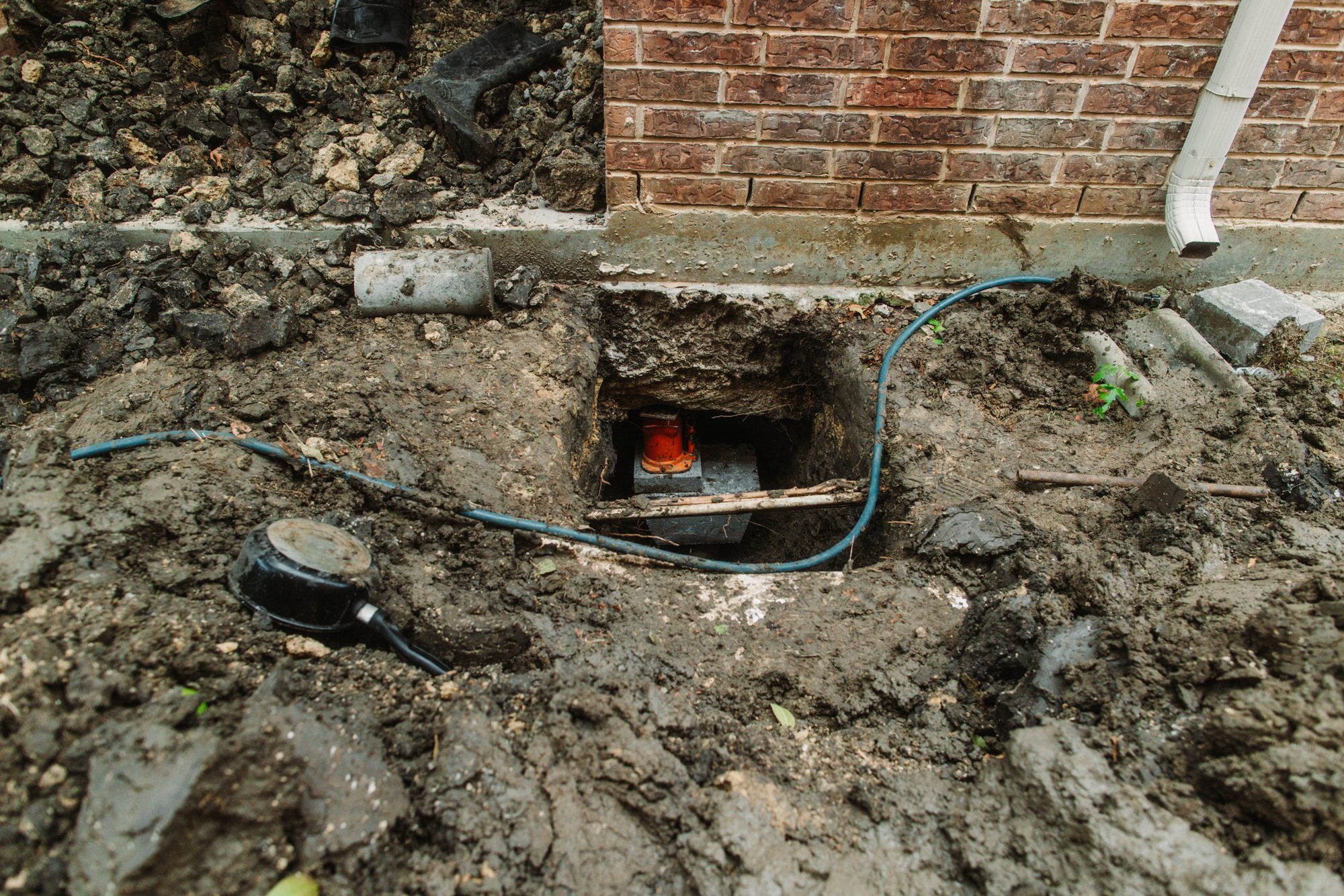
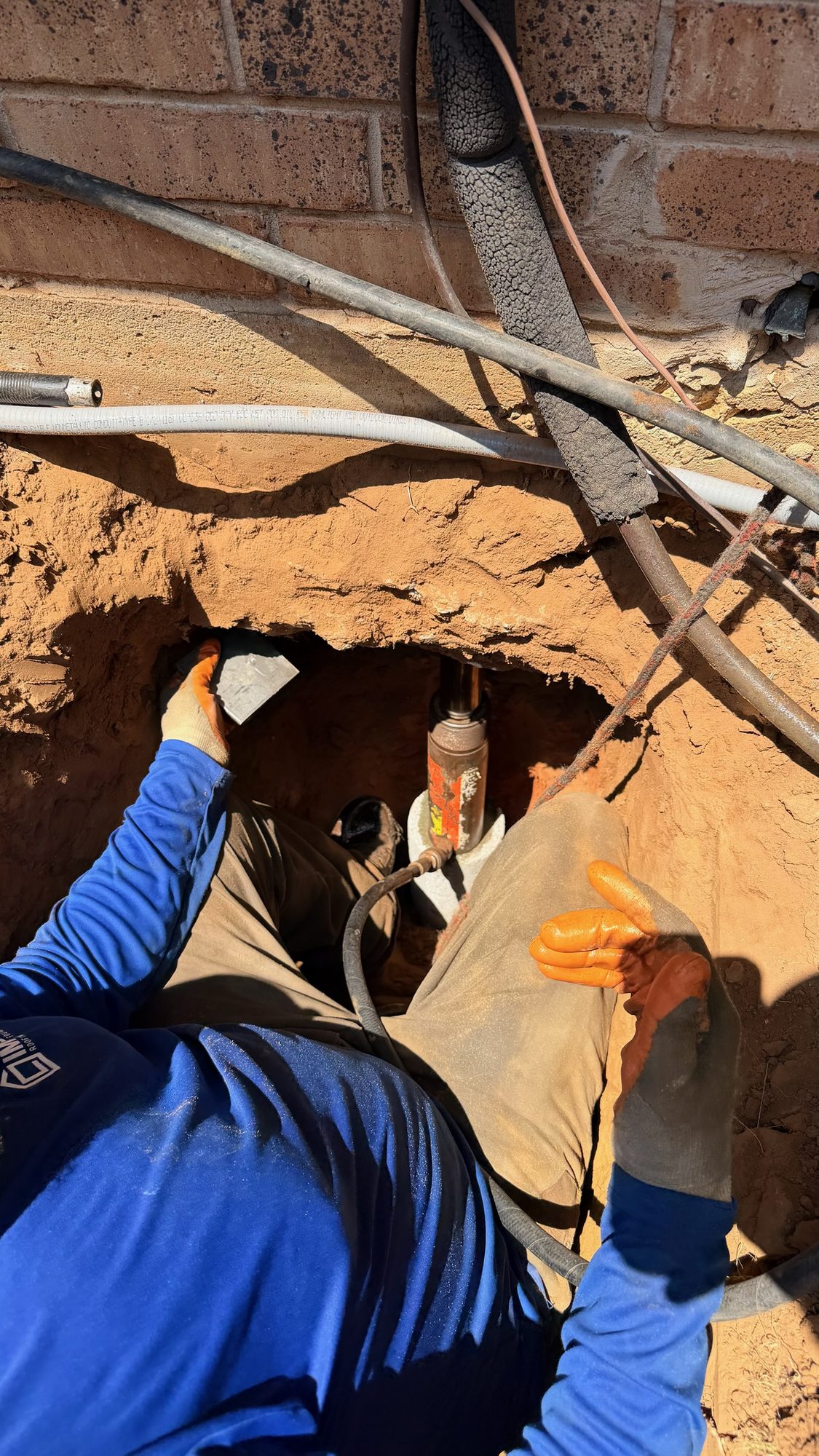
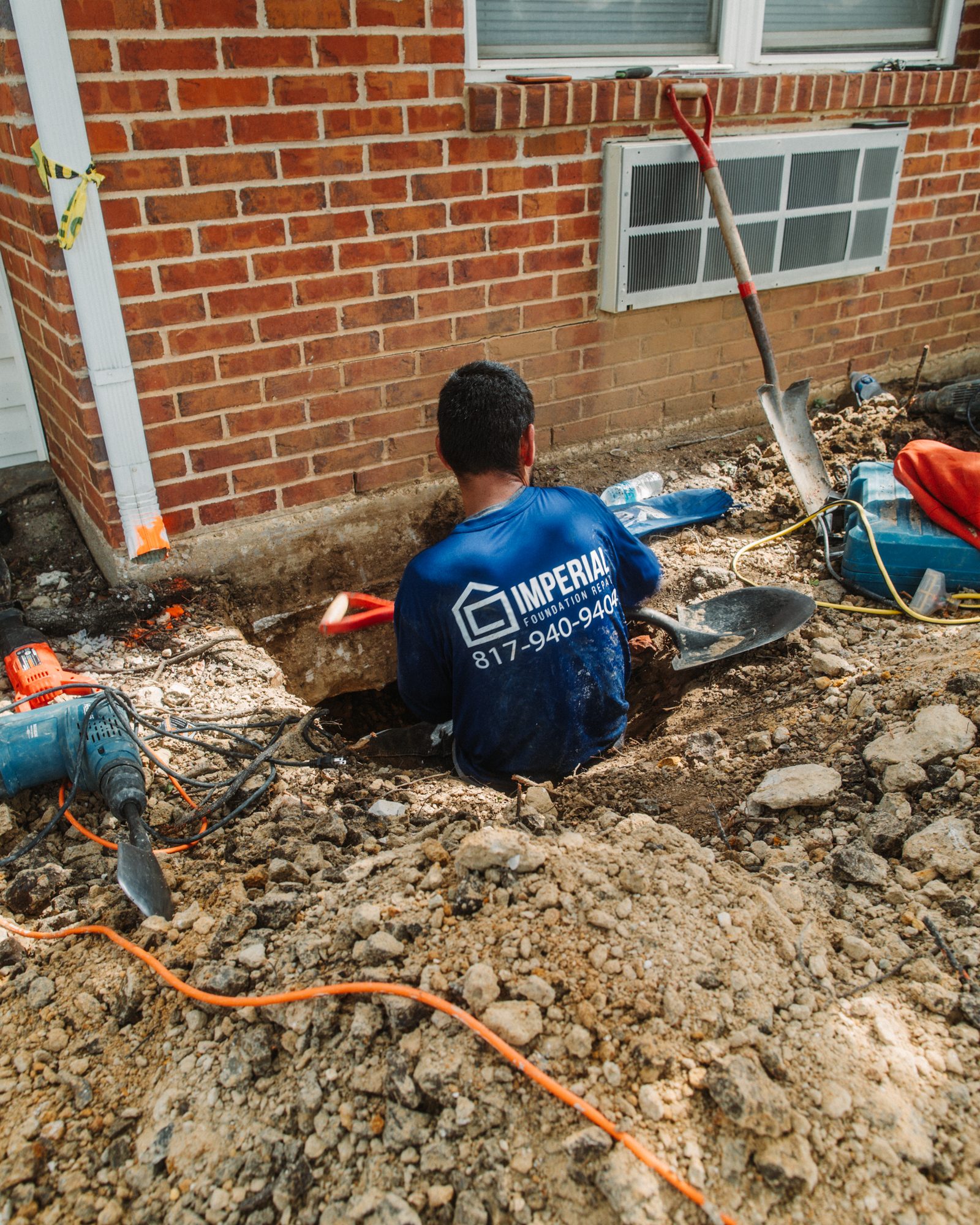
A slab repair puts permanent support under the perimeter beam so the settled section can be lifted and held. We dig access at each placement, drive pier sections down until they hit soil that will actually carry the load, then lift with hydraulic rams working together across the line.
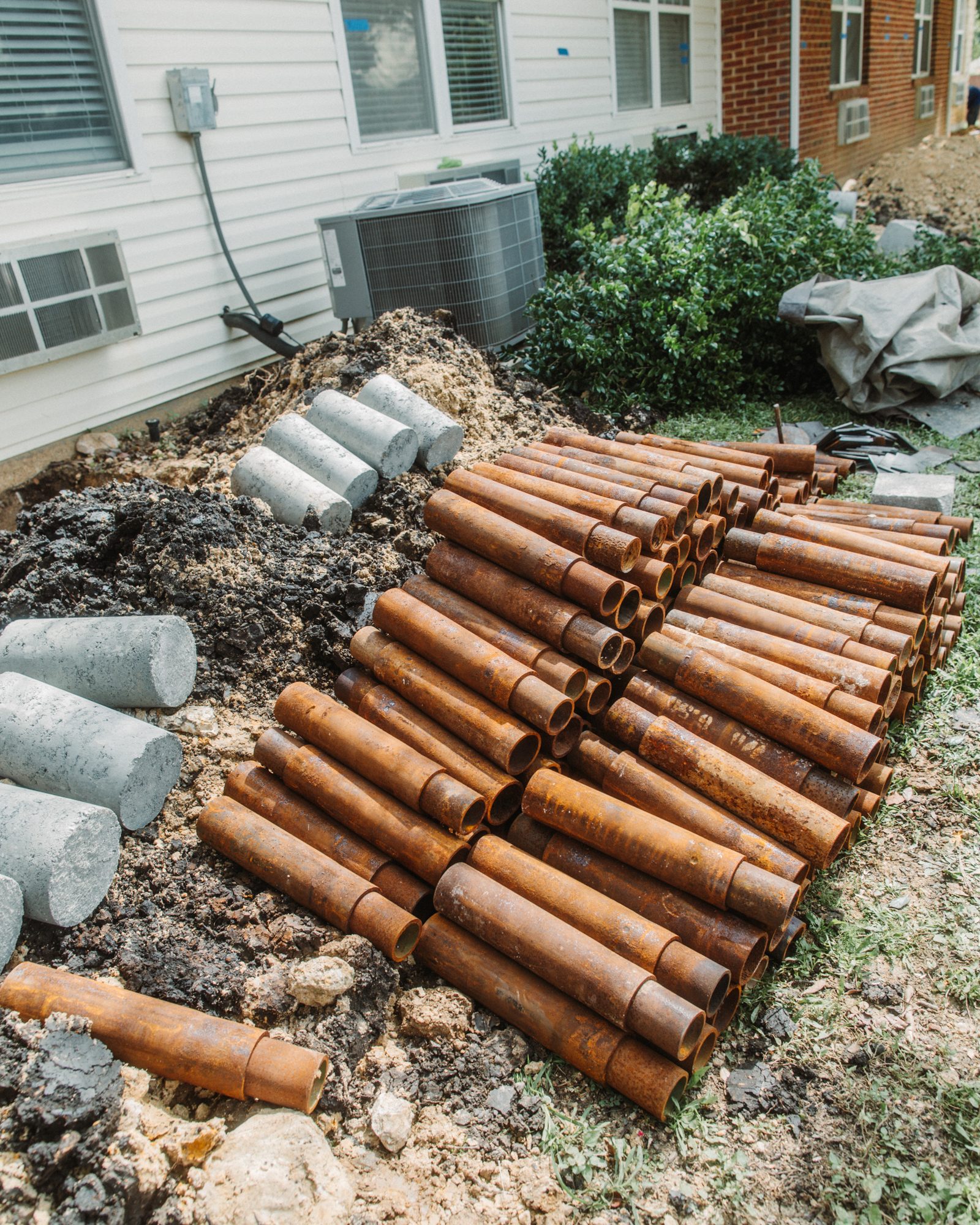
Steel goes in where depth or load calls for it. Concrete goes in where the supporting soil is within reach and the load allows it. On tight interior placements we use a transition pier that pairs a concrete base with a steel section.
The lift is measured, not eyeballed. We take elevation readings before we start and again as we go, and we stop at the elevation the house can take without tearing up finishes.
Slab foundation repair warning signs
Signs a Slab Has Settled
- Stair-step cracks running through the brick or mortar
- Doors and windows that stick, drag, or will not latch
- Cracks at the corners of doorways and windows inside
- Separation where the brick meets a window frame or corner
- Gaps between the ceiling and an interior wall
- Cracks in the slab itself, visible in a garage or under flooring
Our slab foundation repair process
The Process
- 01
Elevation survey
We shoot the whole floor so we can see the shape of the movement, not just the cracks.
- 02
Plan the pier line
Placement, depth, and pier type get decided by the readings, the soil, and the access.
- 03
Dig, drive, and lift
Access holes at each placement, piers driven to load-bearing depth, then a coordinated lift.
- 04
Backfill and clean up
Holes go back, dirt gets compacted, sod goes back down, and the site gets cleaned.
Slab foundation repair cost
What Drives the Cost
Pier count is the biggest factor, then depth, then access. A pier under an open side yard is faster than one that requires tunneling under a patio or working around a pool.
We price the actual scope after we measure. Anyone who quotes your slab over the phone is guessing, and the guess is rarely in your favor.
Slab foundation repair questions
Straight Answers
If your question is not here, call and ask. You get a person who has been under houses, not a script.
Do all the cracks close up after the lift?
Many of them tighten up considerably. Some stay visible, especially in older mortar. The point of the lift is to stop the movement and restore support, and cosmetic repair comes after.
Steel or concrete piers, which one do I need?
It depends on how deep the load-bearing soil is, how heavy the load is, and how much room we have to work. We will tell you what your house calls for and why.
Does foundation repair require a permit?
Structural foundation repair is permitted work in most North Texas cities and typically involves an engineer's plan. We walk you through what your address requires before anything starts.
How long does a slab job take?
Most residential pier jobs run one to three days on site, plus cleanup. Bigger scopes and tunneling take longer, and we tell you the schedule up front.
Related foundation repair services
What People Usually Read Next
- Steel piers
Driven steel piers for active settlement, deeper soil conditions, and heavier loads.
- Foundation inspection
An elevation survey and a straight answer about whether your house needs work right now.
- House leveling
Bringing a settled house back to a practical elevation and holding it there with permanent support.
Foundation evaluation in Arlington and North Texas
Get a Clearer Answer About Your Property
Call us and talk to a real person.
Tell us what you are seeing. Sometimes the right next step is not a repair.
Talk to us directly
(817) 940-9404Monday through Saturday, 7:00 a.m. to 7:00 p.m. Based in Arlington, working across Tarrant County and North Texas.
Have the address handy and a rough idea of what you are seeing. That is enough to get the visit on the schedule.