Steel Piers

    Metal foundations driven deep into the ground for stable support. Ideal for correcting foundation settlement issues effectively.

    Free Estimate

    No obligation

    Lifetime warranty included

    About Steel Piers

    Steel piers are the gold standard in permanent foundation repair. Galvanized steel pipes are hydraulically driven through unstable soil layers until they reach load-bearing strata — typically bedrock or densely compacted soil 20 to 30 feet below the surface in the Dallas-Fort Worth area. Once seated, the weight of your structure is transferred from the shifting upper soil to these deep, stable supports. The result is a foundation that stays level for the life of the home, backed by our lifetime transferable warranty.

    Steel pier foundation bracket bolted to a concrete footing inside an excavated hole, showing galvanized steel hardware secured against the foundation wall in North Texas clay soil

    What Are Steel Piers?

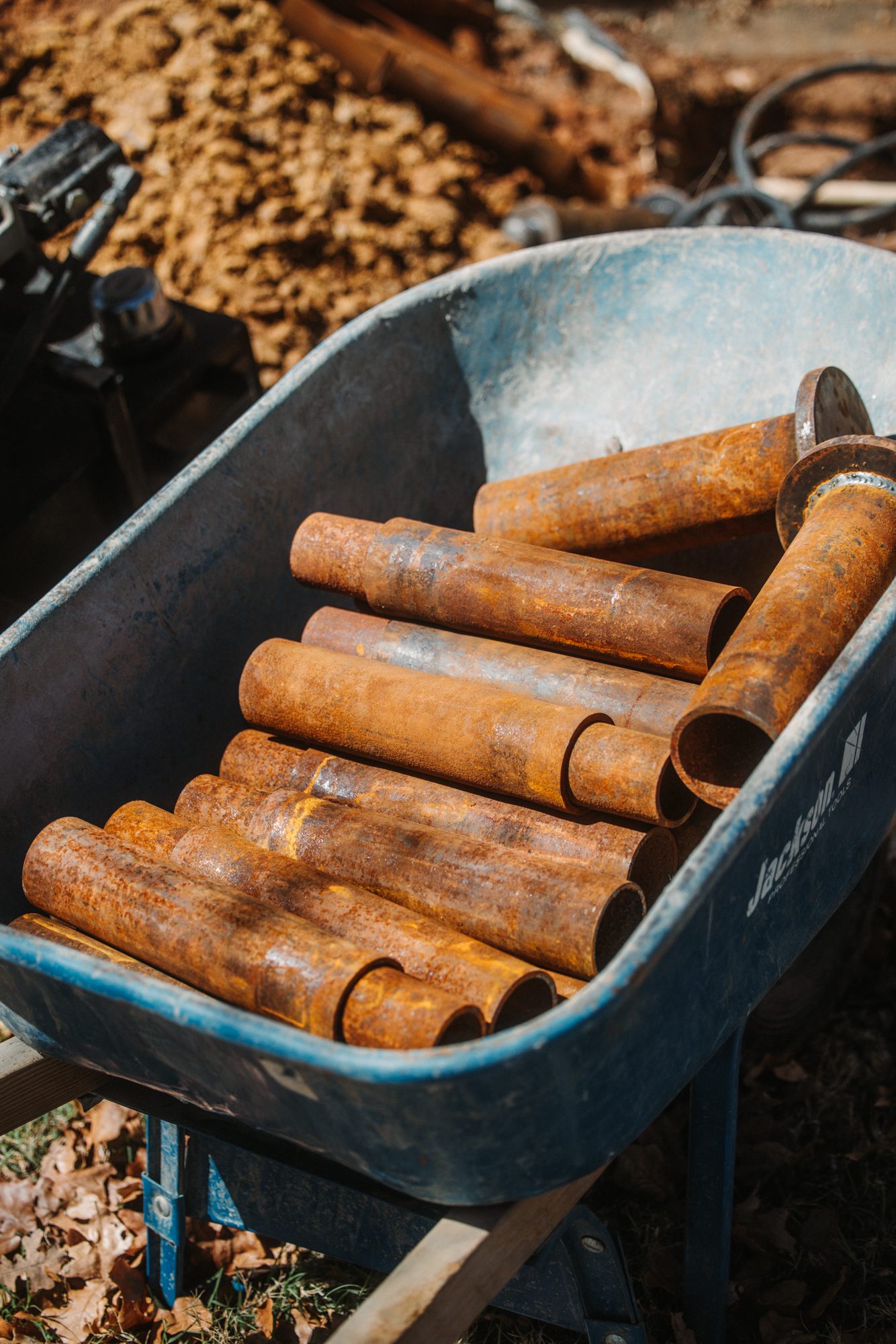
    Steel piers — also called steel push piers or resistance piers — are hollow, galvanized steel tubes typically 2⅞″ to 3½″ in outside diameter. They are assembled in sections and hydraulically driven end-to-end beneath a foundation until each pier reaches soil or rock capable of supporting the structure's load.

    Unlike surface-level repair methods, steel piers bypass the active zone (the top 10–15 feet of soil most affected by moisture changes and seasonal movement) and anchor into stable bearing strata far below. In the DFW metroplex, that bearing layer is usually Austin Chalk limestone or Eagle Ford shale, found at depths ranging from 15 to 35 feet depending on the location.

    Why North Texas Foundations Need Deep Support

    The Dallas-Fort Worth region sits on some of the most expansive clay soil in the United States. According to the American Society of Civil Engineers (ASCE), expansive soils cause more financial damage to structures each year than floods, hurricanes, tornadoes, and earthquakes combined — an estimated $15 billion annually in the U.S. alone. North Texas clay can expand up to 10% in volume when saturated and shrink dramatically during drought, creating a cycle of heave and settlement that slowly tears foundations apart.

    Steel piers solve this by transferring the full structural load past the active zone into strata that do not respond to moisture changes. Once in place, they provide a fixed, load-rated anchor point that resists both settlement and uplift.

    How Steel Pier Installation Works

    Steel pier installation is a well-documented, engineered process. Here is what happens on a typical DFW residential project:

    1. Engineering-Grade Assessment

    Before any equipment touches the ground, a trained technician performs a comprehensive foundation evaluation. Elevation readings are taken across the entire slab using a manometer or digital level, producing a topographical map of the foundation's current position. This data determines exactly where piers are needed and how much lift is required at each location.

    2. Excavation and Bracket Mounting

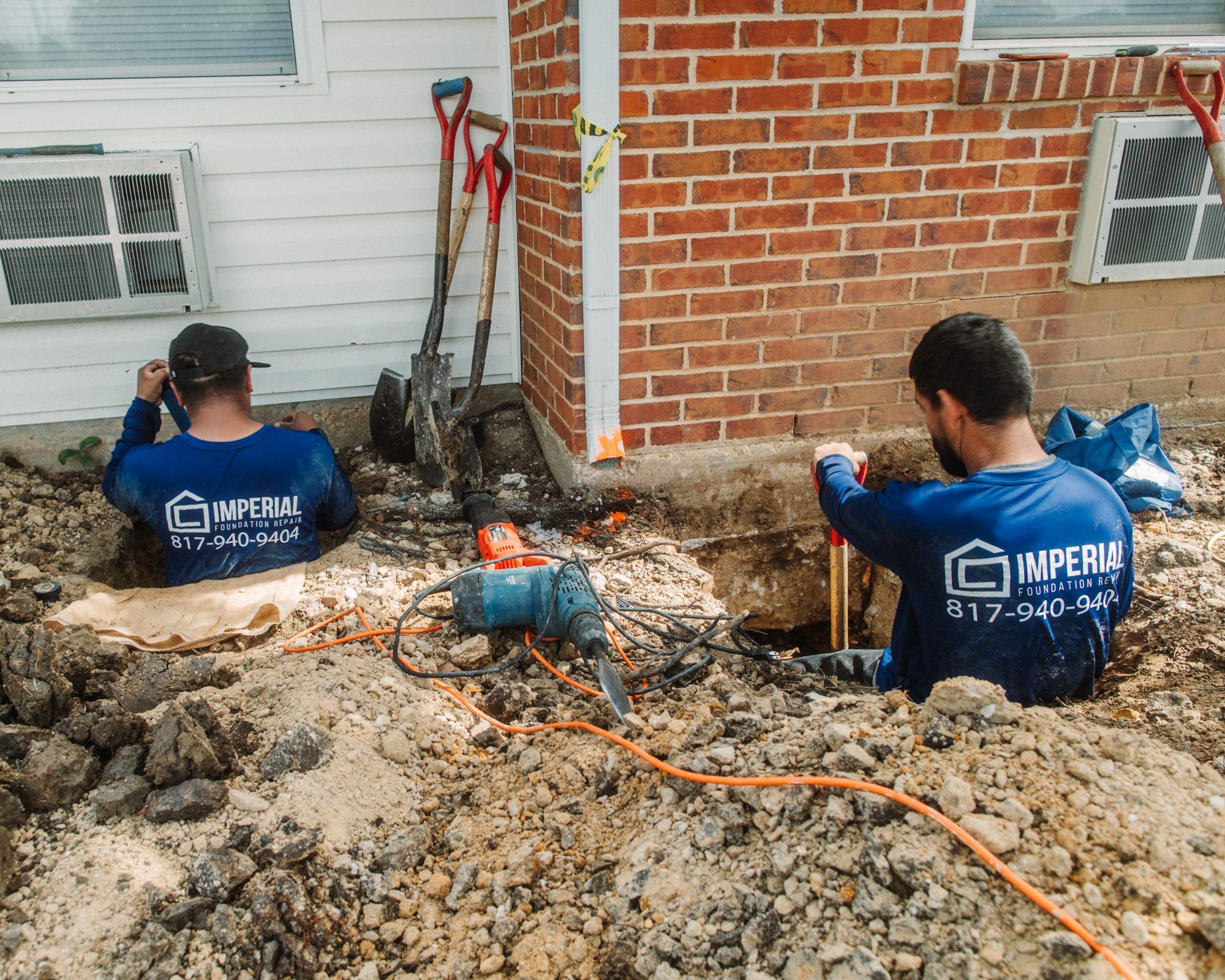
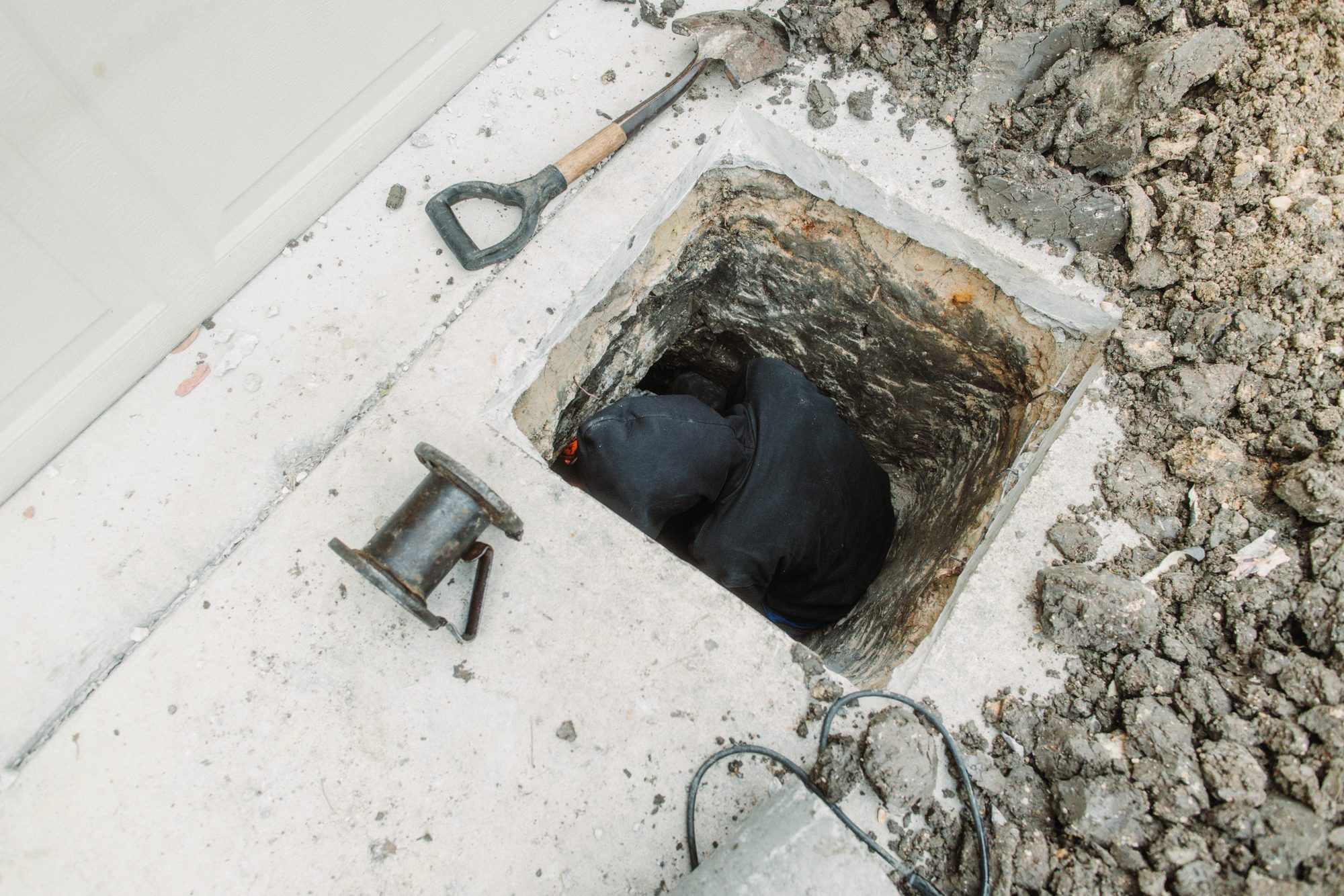
    Small excavation holes (roughly 3 feet wide and 3 feet deep) are dug at each pier location around the foundation perimeter. A heavy-duty steel bracket is then bolted directly to the concrete footing. This bracket acts as the interface between the pier column and the foundation itself.

    3. Hydraulic Driving

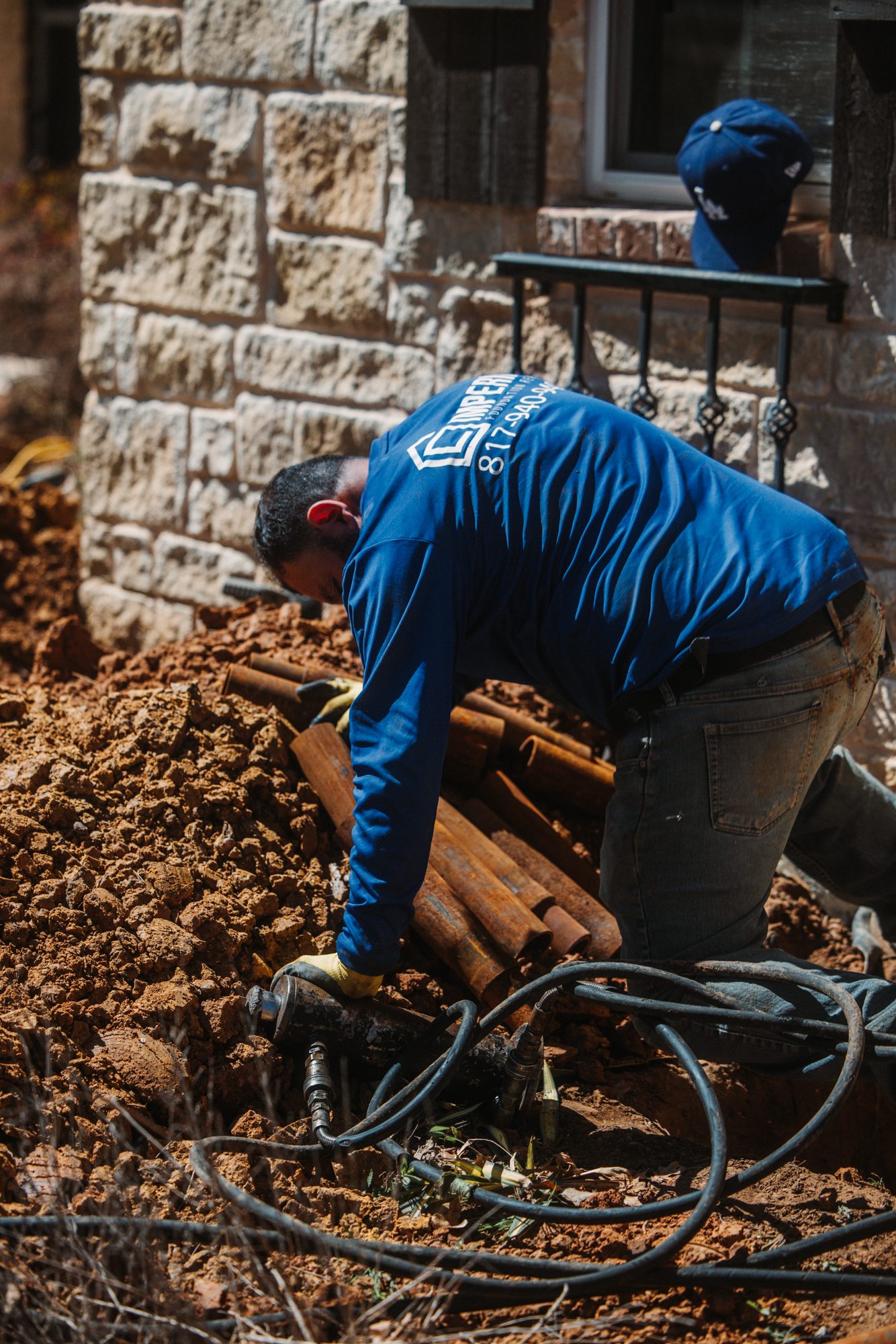
    Steel pier sections are loaded into the bracket and driven downward using a hydraulic ram. The ram presses each section against the weight of the structure (a process called resistance driving), which is why steel piers are sometimes called "resistance piers." Sections are added one at a time until the pier reaches refusal — the point where the soil or rock resistance equals or exceeds the load capacity required. In DFW, this typically occurs at 20–30 feet, though some sites require piers beyond 40 feet.

    4. Synchronized Lifting

    Once all piers reach refusal, hydraulic jacks are placed on every pier simultaneously. The foundation is then raised in small, controlled increments — usually fractions of an inch at a time — to avoid cracking drywall, breaking plumbing lines, or stressing the slab. The target elevation is based on the original survey data.

    5. Lock-Off and Backfill

    After the foundation reaches the target position, each pier is permanently locked off with steel shims and bolts. The excavation holes are backfilled and compacted, and the site is restored. Most residential projects are completed in 1–3 days with minimal disruption to landscaping.

    Steel Piers by the Numbers

    Hard data matters when you are investing in your home's structural integrity. Here is how steel piers perform in measurable terms:

    • Typical depth in DFW: 20–30 feet (some sites exceed 40 feet)
    • Load capacity per pier: 5,000–10,000+ lbs depending on pier diameter and soil conditions
    • Pier diameter: 2⅞″ to 3½″ OD (residential), up to 4½″ for commercial
    • Material: Galvanized or epoxy-coated steel rated to ASTM A500 Grade B/C standards
    • Installation time: 1–3 days for most residential projects (8–25 piers)
    • Warranty: Lifetime, transferable to subsequent homeowners
    • Foundation Recovery Association data: Steel push piers have a documented success rate exceeding 95% when installed to proper specifications
    • Minimal excavation footprint: Each pier requires only a ~3 ft × 3 ft hole, preserving landscaping, driveways, and hardscaping

    These numbers reflect industry standards and our own project history across the DFW metroplex. Every installation is documented with before-and-after elevation measurements so you can see exactly how your foundation responded to the repair.

    Common Industry Practices and What to Look For

    Not all steel pier installations are equal. Here are the practices that separate a quality installation from a substandard one:

    Driving to True Refusal

    A properly installed steel pier must be driven until it reaches genuine refusal — the point where the pier physically cannot be pushed deeper because it has hit competent bearing material. Some contractors cut corners by stopping early, which leaves the pier resting in unstable soil. At Imperial Foundation Repair, every pier is driven to documented refusal, and we record the depth and driving pressure for your records.

    Bracket Quality and Attachment

    The bracket connecting the pier to your foundation is critical. Look for thick-gauge steel brackets that are mechanically fastened to the footing, not simply placed against it. Our brackets are engineered to distribute the lifting force evenly across the foundation wall, preventing point-load cracking.

    Synchronized Lift (Not Individual)

    The foundation should be raised using all piers simultaneously, not one at a time. Individual lifting creates uneven stress that can crack the slab or damage interior finishes. Our crews use a manifold system that applies hydraulic pressure to every pier at once, raising the structure evenly.

    Post-Installation Verification

    After lift and lock-off, a reputable contractor will take a second set of elevation readings and compare them to the pre-repair survey. This documentation proves the repair achieved the intended result and becomes part of your permanent home record — valuable for insurance claims and future real estate transactions.

    Drainage Considerations

    Pier installation alone does not fix the root cause of foundation movement if poor drainage is driving moisture into the soil around your home. A thorough contractor will evaluate your grading, downspouts, and surface drainage and recommend corrections if needed.

    Steel Piers vs. Other Foundation Repair Methods

    How steel piers compare to concrete piers and helical piers across key performance factors.

    FeatureSteel PiersConcrete PiersHelical Piers
    Typical Depth in DFW20–30 ft (up to 40+ ft)8–12 ft10–25 ft
    Reaches BedrockYes — driven to refusalRarelySometimes
    Load Capacity (per pier)5,000–10,000+ lbs3,000–6,000 lbs2,000–5,000 lbs
    Installation Time1–3 days3–7 days (curing)1–2 days
    Best ForHeavy structures, existing homesModerate loads, cost sensitivityLighter structures, new construction
    Soil DisruptionMinimal (small excavation holes)Moderate (drilling required)Minimal (screw-in method)
    Warranty (Imperial)Lifetime, transferableVariesLifetime, transferable
    Documented Success Rate95%+~85%~90%

    Data based on industry averages for residential foundation repair in North Texas soil conditions.

    Lifetime Warranty Included

    Transferable to new homeowners

    How It Works

    1

    Foundation Assessment

    Our experts inspect your foundation and identify all areas requiring pier support.

    2

    Excavation & Bracket Placement

    Small holes are excavated around the foundation perimeter and steel brackets are secured to the footing.

    3

    Pier Installation

    Galvanized steel pipes are hydraulically driven through brackets deep into stable soil or bedrock.

    4

    Lift & Stabilize

    The foundation is raised to its original position and permanently stabilized with the pier system.

    Key Benefits

    Permanent foundation stabilization
    Reaches bedrock for maximum support
    Minimal disruption to landscaping
    Lifetime transferable warranty
    Handles heavy structural loads
    Proven track record in North Texas soil

    Frequently Asked Questions

    Ready for Steel Piers?

    Get a free inspection and estimate from DFW's most trusted foundation repair experts.