Drainage Correction

    French drains, tight-lines, sump pumps, and surface drainage systems engineered for DFW's expansive clay soil — stopping water damage before it reaches your foundation.

    Free Estimate

    No obligation

    5-year warranty included

    About Drainage Correction

    Poor drainage is the single most preventable cause of foundation failure in Dallas-Fort Worth. When water pools against your slab or saturates the expansive clay soil beneath your home, the ground swells unevenly — then shrinks during drought — creating differential settlement that cracks walls, jams doors, and compromises structural integrity. Imperial installs French drains, tight-line downspout systems, sump pumps, surface drains, and full-property grading corrections designed specifically for North Texas soil conditions. Every system is engineered to move water away from your foundation and maintain consistent soil moisture year-round.

    Drainage Correction

    5-year Warranty Included

    How It Works

    1

    Comprehensive Drainage Assessment

    We evaluate water flow patterns, soil saturation levels, grade slopes, downspout discharge points, and existing drainage infrastructure around your entire property using laser levels and moisture testing.

    2

    Engineered System Design

    A custom drainage plan is designed specifying French drain routes, tight-line connections, surface drain placement, sump pump positioning (if needed), pipe sizing, and discharge locations — all engineered for your property's specific soil and grade conditions.

    3

    Trenching and Installation

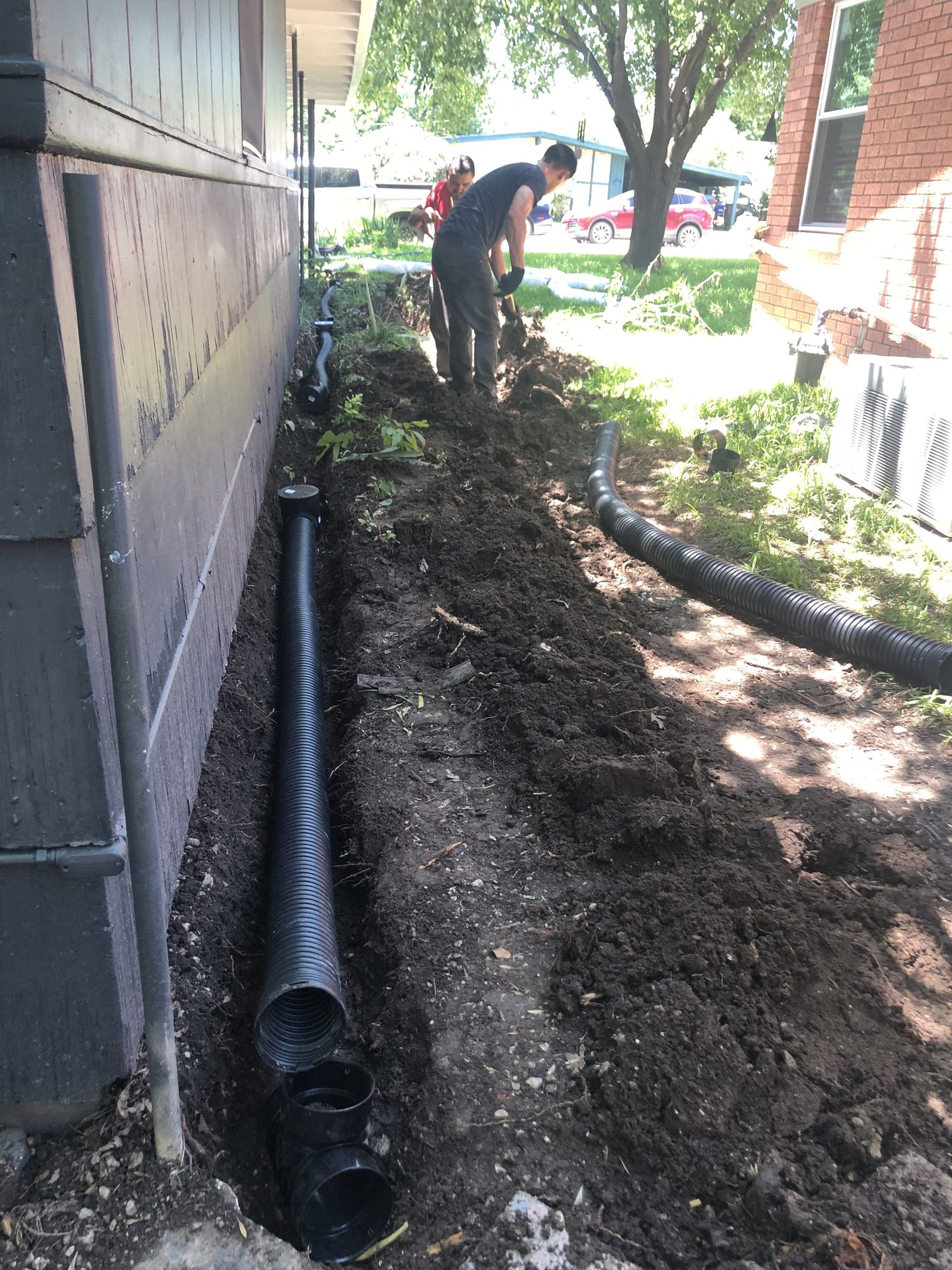
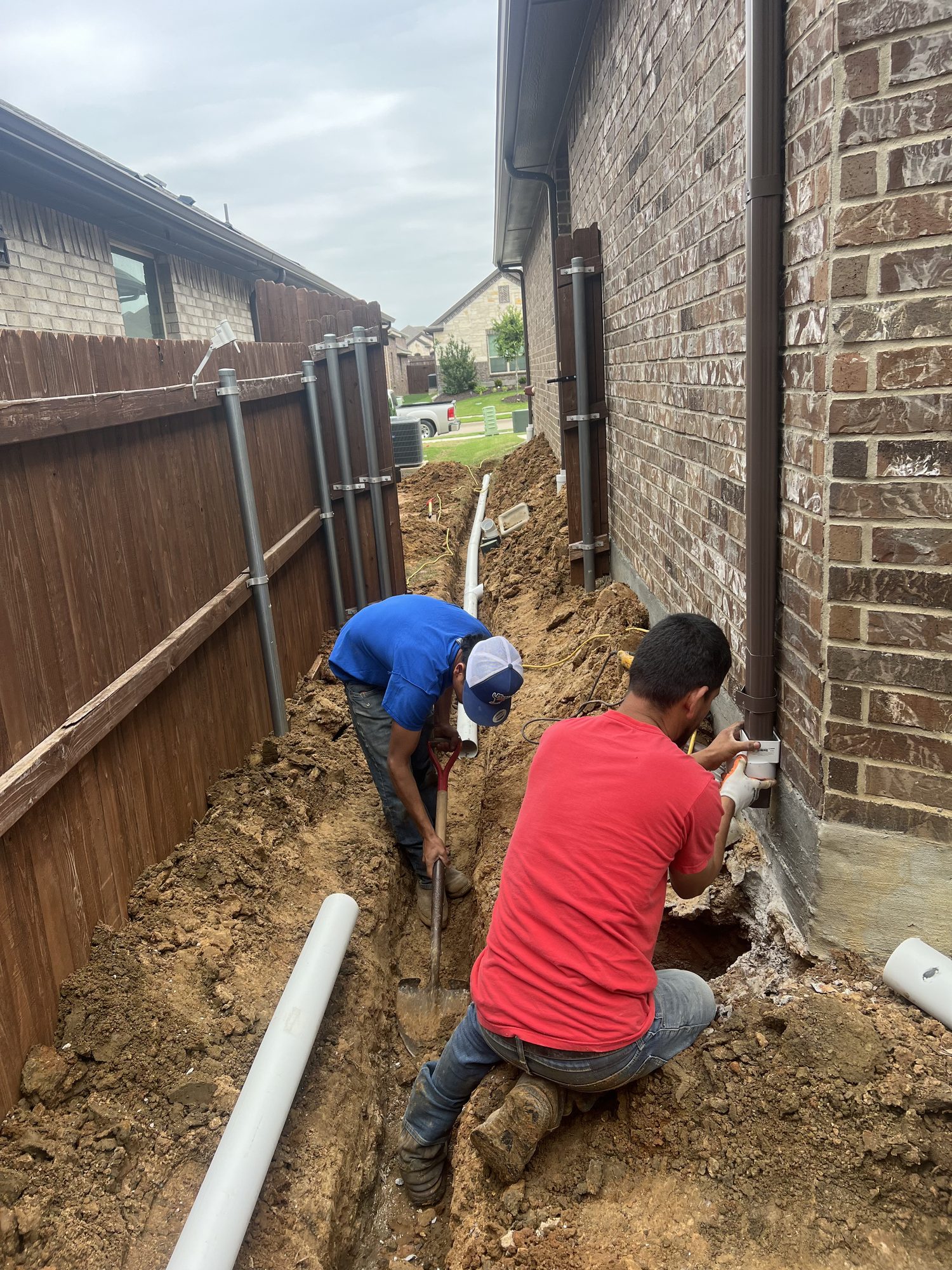
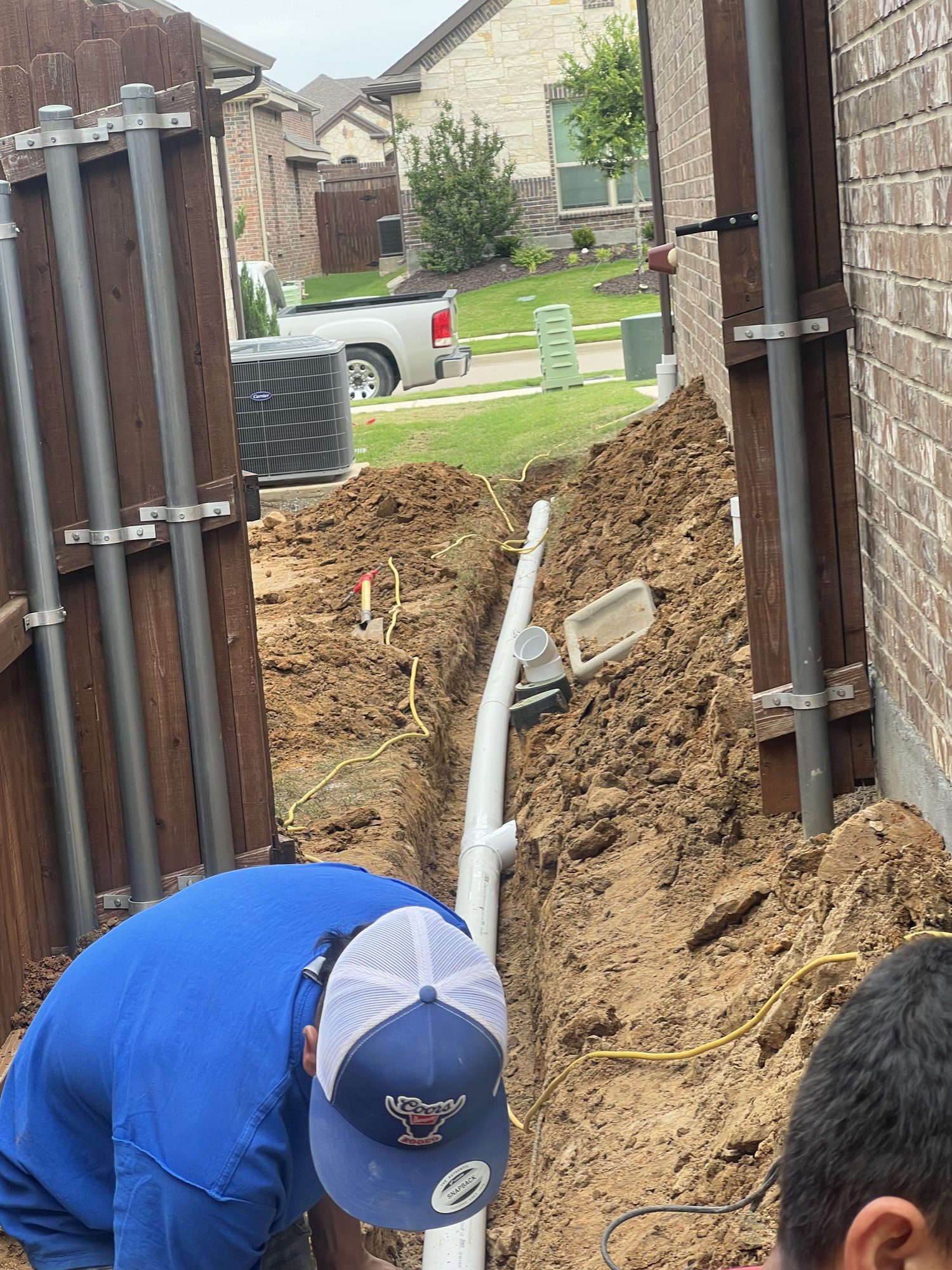
    Trenches are excavated to proper depth and slope, lined with filter fabric, filled with washed gravel, and fitted with perforated or solid PVC pipe. Tight-lines are connected to downspouts, catch basins are set, and all connections are sealed and tested for flow.

    4

    Testing, Grading, and Final Inspection

    The complete system is flood-tested with water to verify flow rates and proper discharge. Final grading ensures positive slope away from the foundation at a minimum 6-inch drop over the first 10 feet. All disturbed areas are restored.

    Key Benefits

    Prevents foundation damage
    Eliminates standing water
    Protects landscaping from erosion
    Custom-designed for your property
    5-year warranty coverage
    Increases property value
    Routes roof runoff away from the slab via tight-lines
    Reduces risk of under-slab plumbing damage
    Maintains consistent soil moisture year-round
    Integrates French drains, sump pumps, and surface drains

    French Drains and Tight-Line Systems for DFW Properties

    Cross-section diagram of a French drain system installed beside a concrete slab foundation in North Texas clay soil showing perforated pipe, gravel fill, and filter fabric

    A French drain is the most effective subsurface drainage solution for North Texas residential foundations. The system consists of a perforated pipe bedded in washed gravel inside a fabric-lined trench, installed along the foundation perimeter or through problem areas in the yard. Water migrates through the soil, enters the gravel bed, flows into the perforated pipe, and is routed to a discharge point away from the structure.

    Why French Drains Matter in DFW

    Dallas-Fort Worth sits on the Eagle Ford shale and Austin chalk geological formations, overlaid with highly expansive clay. This clay can swell 10–15% in volume when saturated — enough to lift a foundation unevenly and cause settlement that requires steel pier repair. A properly graded French drain intercepts subsurface water before it reaches the foundation, keeping soil moisture balanced and preventing the swell-shrink cycle that destroys slabs.

    Tight-Line Downspout Systems

    Tight-lines are solid (non-perforated) PVC pipes connected directly to your gutter downspouts. Instead of dumping roof runoff at the base of your foundation — where it saturates the soil — tight-lines capture that water at the downspout and route it through buried pipe to a pop-up emitter 10–15 feet away from the structure. A single 2,000-square-foot roof sheds roughly 1,250 gallons of water per inch of rain. Without tight-lines, that volume concentrates directly against your slab.

    We install tight-lines alongside French drains in most DFW drainage correction projects. The combination addresses both subsurface groundwater (French drain) and surface roof runoff (tight-line) — the two primary sources of foundation-damaging moisture.

    Sump Pumps and Surface Drainage Solutions

    Sump pump basin installed in a residential crawl space with submersible pump, gravel surround, and PVC discharge pipe for foundation water management

    When a Sump Pump Is Necessary

    Some DFW properties have conditions where gravity alone cannot move water away from the foundation. Low-lying lots, homes with pier-and-beam crawl spaces below grade, and properties with high water tables during spring storms all benefit from sump pump installation. The pump sits in a collection basin at the lowest point of the drainage system and activates automatically when water reaches a set level, pushing it through a discharge line to a safe drainage point.

    Surface Drains and Channel Drains

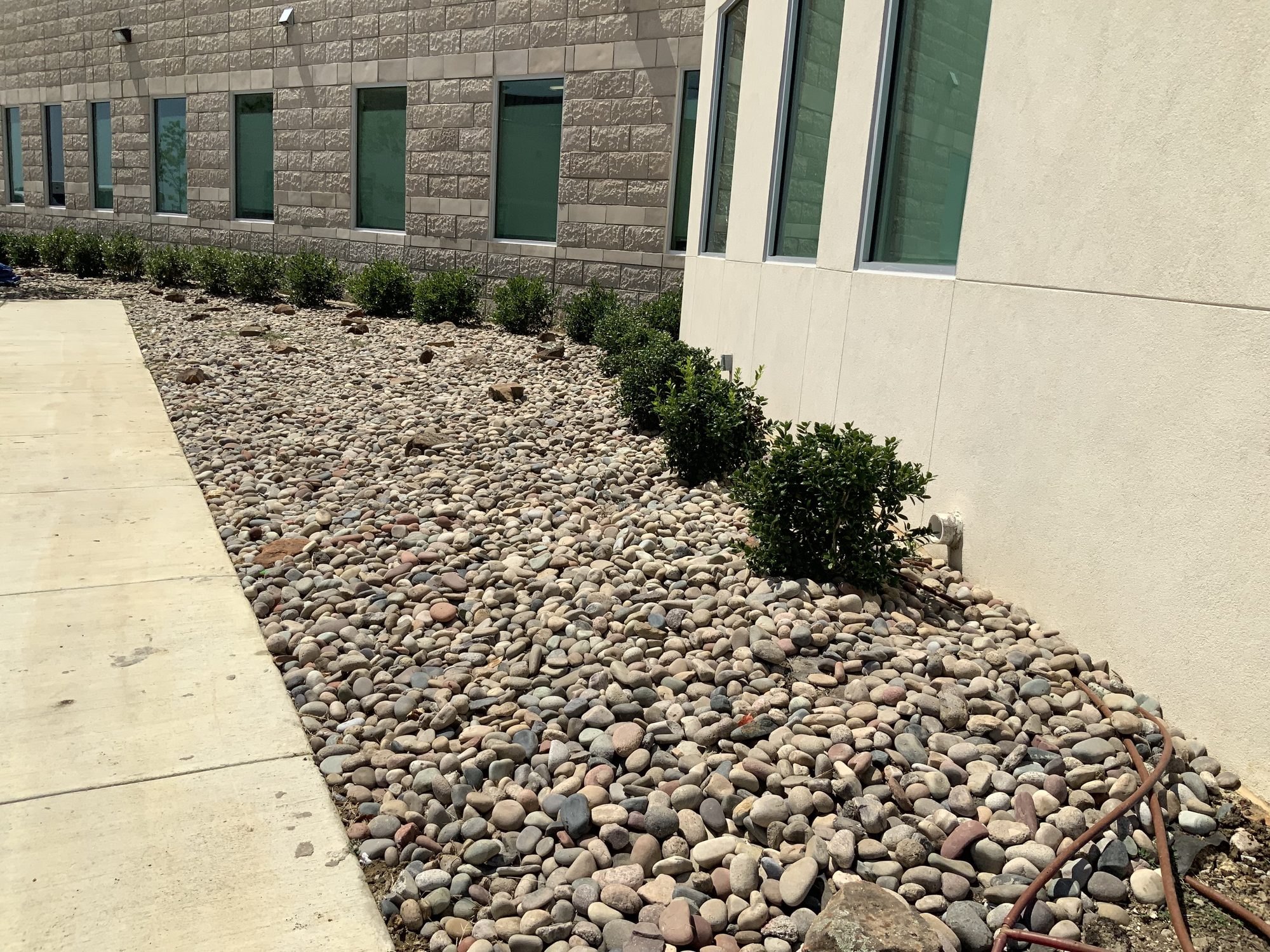
    Surface drains (also called area drains or catch basins) collect standing water from low spots in the yard, driveway edges, and patio areas. Channel drains — long, narrow grates installed across driveways or walkways — intercept sheet flow before it reaches the foundation. Both connect to underground solid pipe that routes water to the property perimeter or storm drainage.

    For properties with concrete flatwork that traps water against the foundation, we often integrate channel drains into the concrete pour or cut them into existing slabs. Combined with proper grading, these systems eliminate the standing water that accelerates soil erosion and foundation undermining.

    System Integration

    Most DFW drainage correction projects use a combination of systems. A typical residential installation might include a French drain along the foundation perimeter, tight-lines on all four downspouts, two surface catch basins in low yard areas, and a sump pump if the lot grade does not allow gravity discharge. Every component connects to a unified underground pipe network designed to move water efficiently away from the structure.

    How Unresolved Drainage Problems Destroy Foundations in North Texas

    Foundation damage from poor drainage on a North Texas residential property showing diagonal wall cracks, standing water against the slab, and soil erosion at the foundation edge

    The Data on Drainage-Related Foundation Damage

    According to the American Society of Civil Engineers, expansive clay soil causes more financial damage to structures in the United States annually than floods, hurricanes, and earthquakes combined — an estimated $15 billion per year. North Texas sits squarely in the highest-risk zone. The root cause in most residential cases is not the soil itself but uncontrolled water changing the soil's moisture content unevenly beneath the slab.

    What Happens When Drainage Is Ignored

    When water saturates one side of a foundation while the opposite side remains dry, the soil expands unevenly. This creates differential settlement — one section of the slab drops while another heaves upward. The result is predictable and progressive:

    • Stage 1 — Cosmetic cracks: Hairline cracks appear in drywall, typically at door and window corners. Doors begin sticking.
    • Stage 2 — Structural movement: Exterior brick cracks widen to 1/4 inch or more. Gaps form between walls and ceilings. Floor slopes become noticeable.
    • Stage 3 — Active failure: Foundation has settled 1–2 inches or more on the affected side. Steel pier installation or helical pier stabilization becomes necessary. Plumbing lines beneath the slab may crack from movement, compounding the water problem.

    Prevention vs. Repair Cost

    A comprehensive drainage correction system for a typical DFW home costs a fraction of foundation repair. Pier installation on a moderately settled home in the Dallas-Fort Worth area typically runs $8,000–$25,000 depending on the number of piers required. A French drain and tight-line system that prevents the damage in the first place is significantly less. Drainage correction is the single highest-ROI investment a homeowner can make to protect their foundation — and it is the first recommendation we make during every foundation inspection where water management issues are present.

    If your home is already showing signs of settlement and has visible drainage problems, addressing both simultaneously is critical. Installing piers without correcting drainage treats the symptom while leaving the cause active. We coordinate drainage correction alongside pier installation to deliver a permanent, warrantied solution.

    Frequently Asked Questions

    Ready for Drainage Correction?

    Get a free inspection and estimate from DFW's most trusted foundation repair experts.