
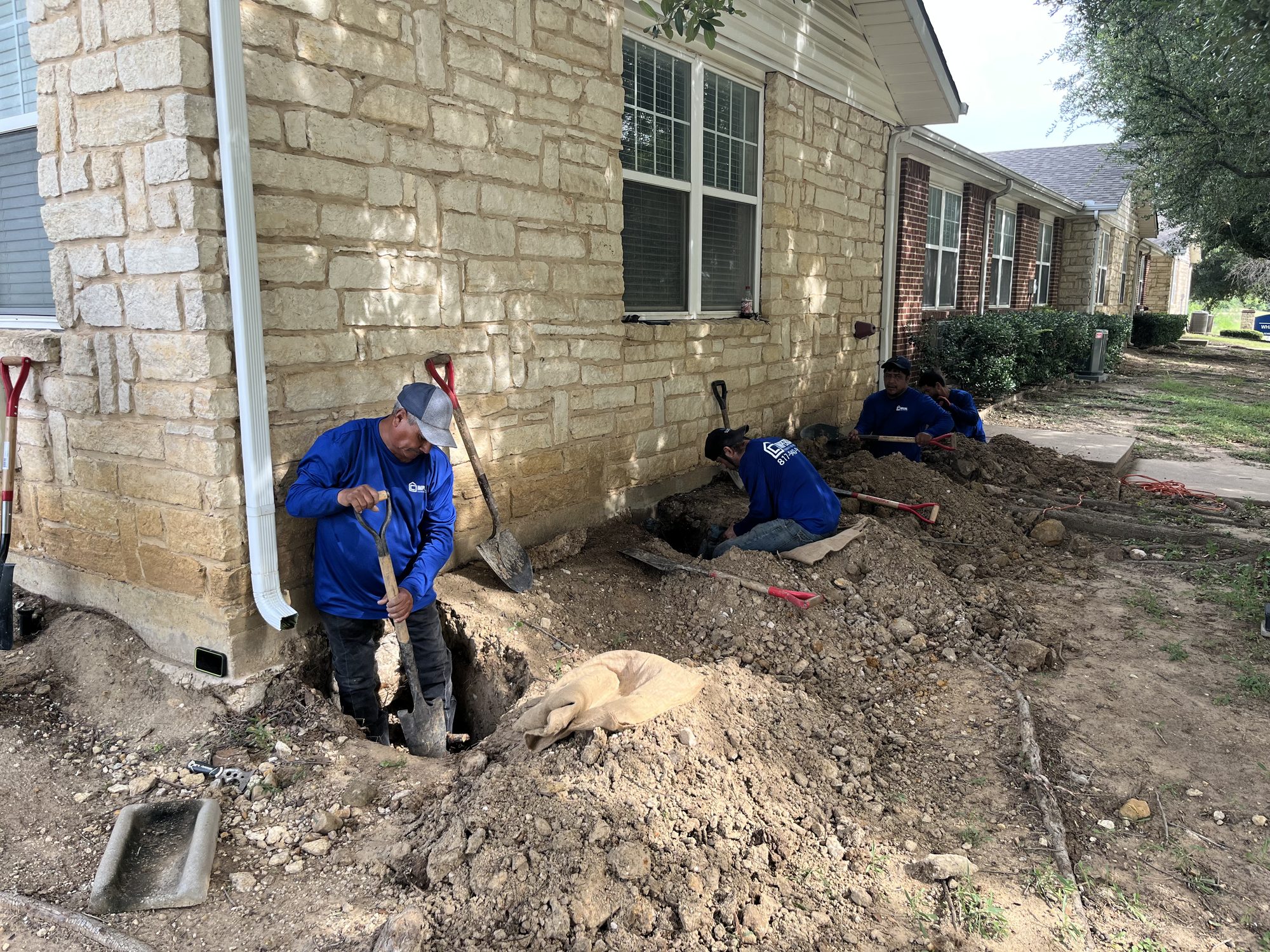
Retaining wall installation in Arlington, TX
A Wall Is Only as Good as Its Drainage
Walls fail from water pressure, not from weight.
Retaining walls hold soil back and shape where water goes on a sloped lot. Built right, they protect the foundation. Built wrong, they lean, bow, and eventually go over.
How we build retaining walls
Base, Backfill, and a Way Out for Water
Most failed walls we see never had drainage behind them.
The base is where a wall is won or lost. Compacted, level, and deep enough for the height of the wall. Everything above it inherits whatever the base does.
Behind the wall, clean drainage rock and a drain line give water somewhere to go. Saturated clay behind a wall exerts enormous pressure, and that is what pushes a wall out of plumb over a few seasons.
We build new walls and rebuild failing ones. On a rebuild we always find out why the first one moved before we set a single block.
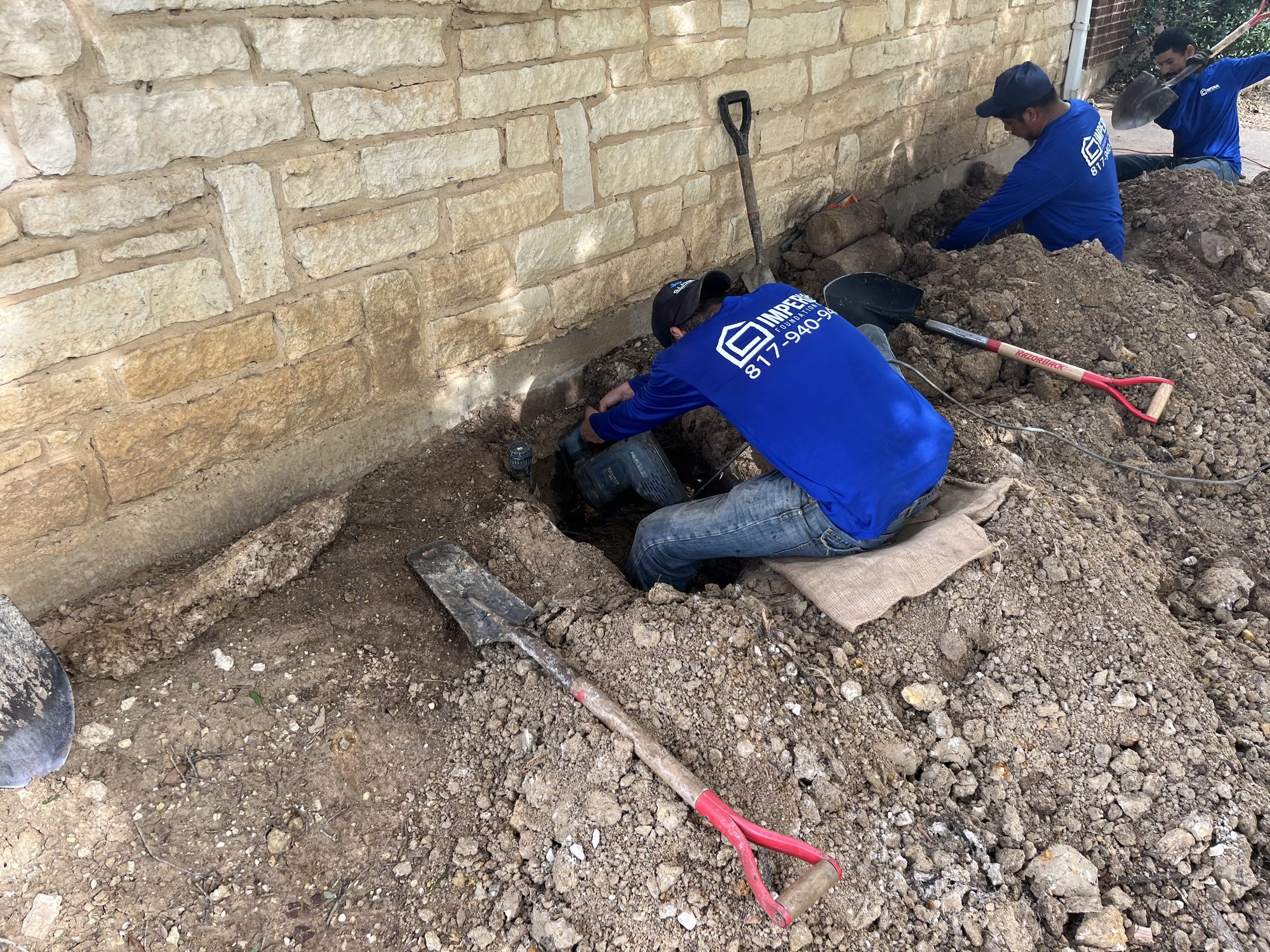
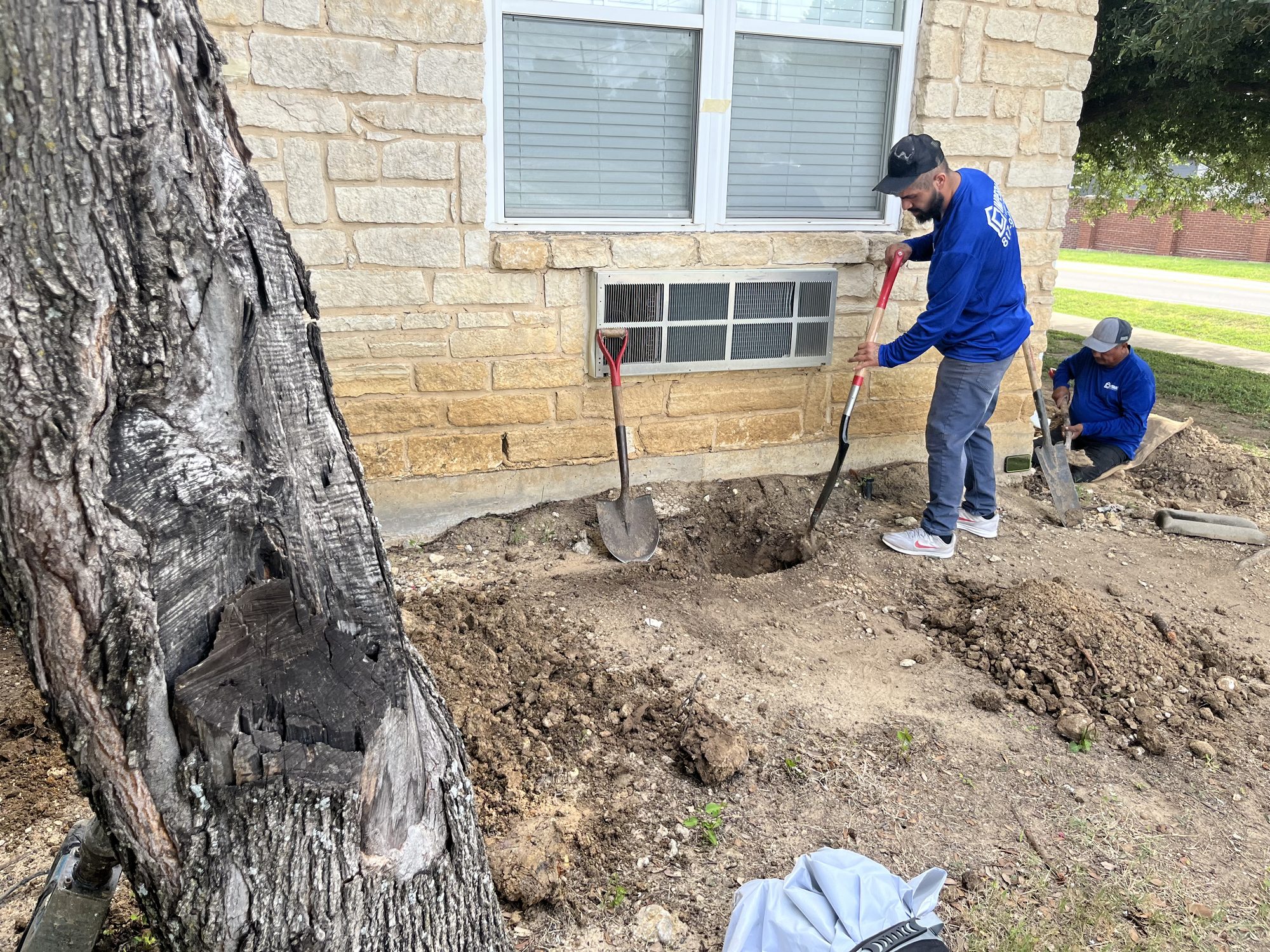
Retaining walls warning signs
Signs a Wall Is in Trouble
- Bowing or leaning out at the top
- Blocks separating or stepping out of line
- Soil or mulch washing over the top after storms
- Water seeping through the face of the wall
- Cracks running vertically through the wall
- The ground behind the wall settling or sinking
Our retaining walls process
The Process
- 01
Read the slope
Wall height, load above it, and where water runs across the lot.
- 02
Build the base
Excavate, compact, and set a level base course that carries everything above it.
- 03
Drain behind it
Clean rock, fabric, and a drain line so pressure does not build up behind the wall.
- 04
Backfill and finish
Compacted lifts behind the wall, then grade and cleanup at the top.
Retaining walls cost
What Drives the Cost
Wall height and length, material, how much excavation the slope requires, and access for equipment and materials.
Taller walls carry more load and need more engineering, base, and drainage, which is where the cost curve steepens.
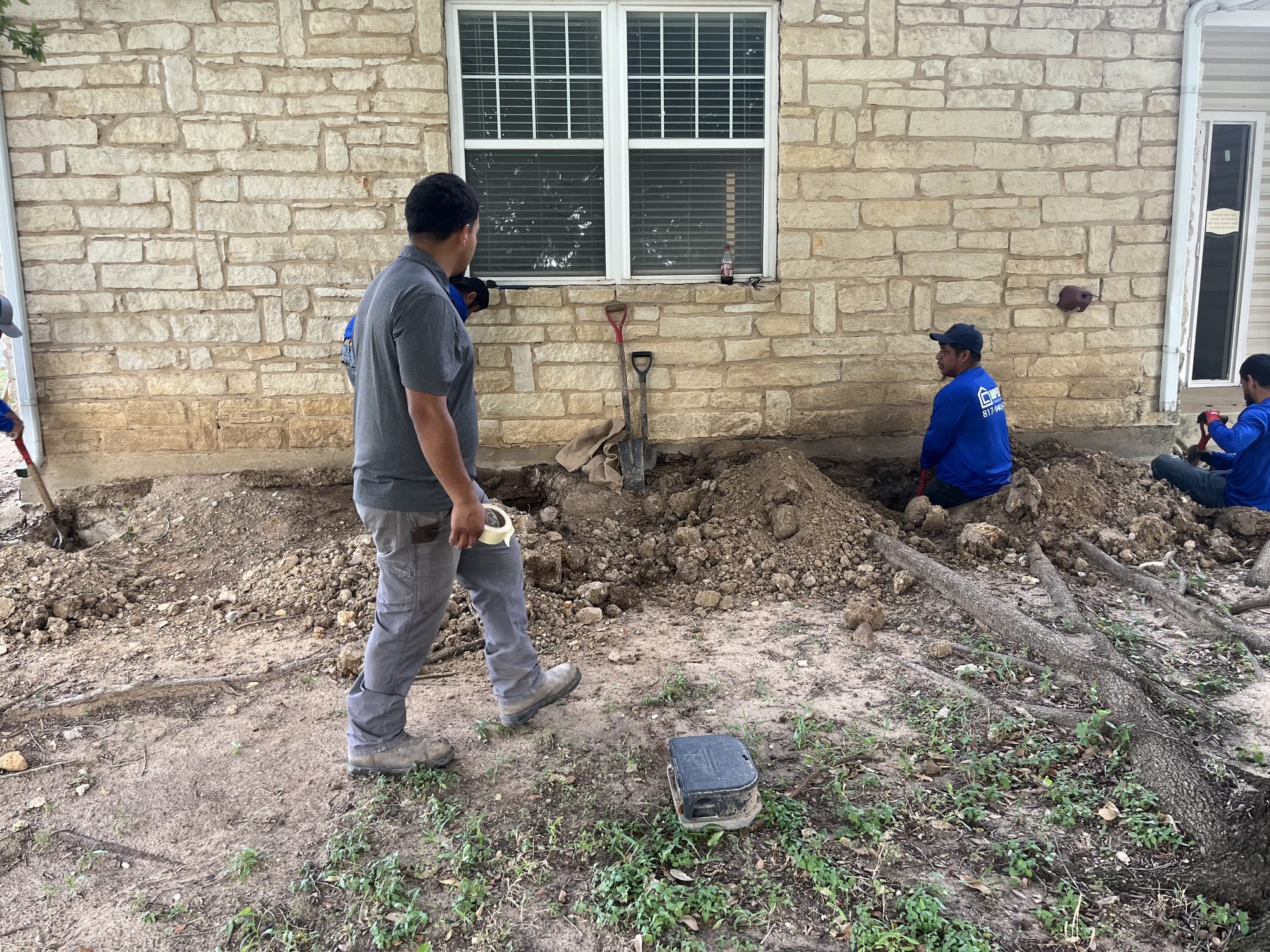
Retaining walls questions
Straight Answers
If your question is not here, call and ask. You get a person who has been under houses, not a script.
Do retaining walls need a permit?
Many North Texas cities permit walls above a certain height, and some require engineered plans. We check your address before we start.
Can you repair a leaning wall or does it have to come down?
It depends how far it has moved and what the base looks like. A wall that has rotated at the base usually needs a rebuild. We will tell you honestly which one you have.
Does a retaining wall protect my foundation?
It can, when it is part of a plan that also moves water away from the house. A wall with no drainage behind it can make a wet-side problem worse.
What materials do you use?
Depends on the height, the look you want, and the site. We will walk you through the options that fit your slope and your budget.
Related foundation repair services
What People Usually Read Next
- Drainage correction
French drains, surface drains, downspout extensions, and regrading so water leaves instead of sitting.
- Concrete leveling
Getting driveways, walks, patios, and garage slabs back to grade, or replacing them when lifting will not hold.
- Foundation inspection
An elevation survey and a straight answer about whether your house needs work right now.
Foundation evaluation in Arlington and North Texas
Get a Clearer Answer About Your Property
Call us and talk to a real person.
Tell us what you are seeing. Sometimes the right next step is not a repair.
Talk to us directly
(817) 940-9404Monday through Saturday, 7:00 a.m. to 7:00 p.m. Based in Arlington, working across Tarrant County and North Texas.
Have the address handy and a rough idea of what you are seeing. That is enough to get the visit on the schedule.