
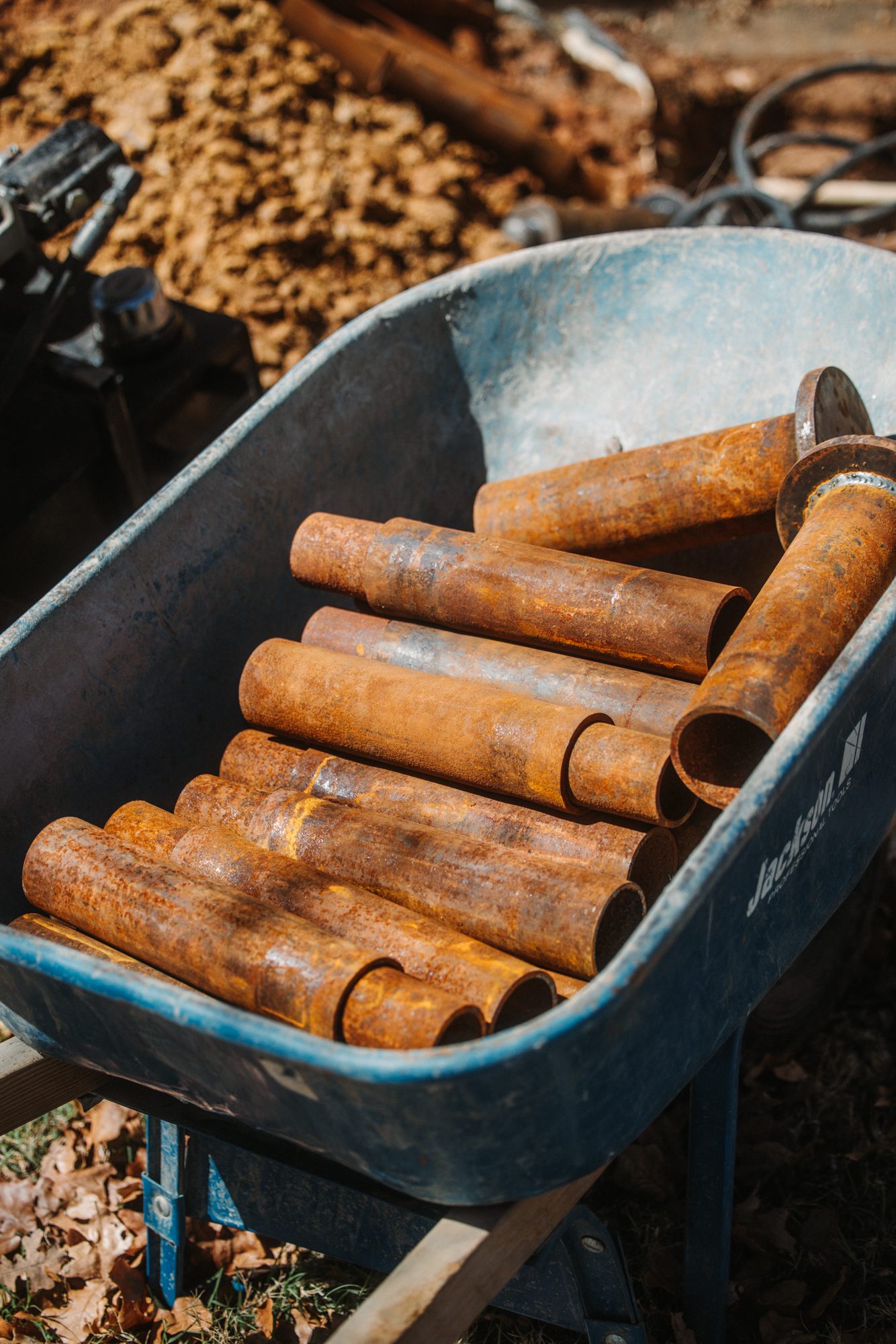
What both types are actually doing
Neither pier is holding your house up by magic. Both are transferring the weight of the structure down past the layer of clay that swells and shrinks with the weather, onto soil that stays put.
The whole question is how deep that stable soil is at your address and how much weight is sitting above the placement. Everything else is marketing.
Concrete piers
Pressed concrete cylinders driven in sequence under the beam or footing. When the supporting soil is within reach, concrete does the job and costs less than steel.
They have a limit. Concrete cylinders can only be pressed so deep before the system stops being effective, so if load-bearing soil sits well below that, concrete stops short of where it needs to be.
- Good for: lighter loads, sites where stable soil is within reach, budget-conscious scopes.
- Not the answer when: depth to stable soil is significant, or a heavy two story wall sits over the placement.
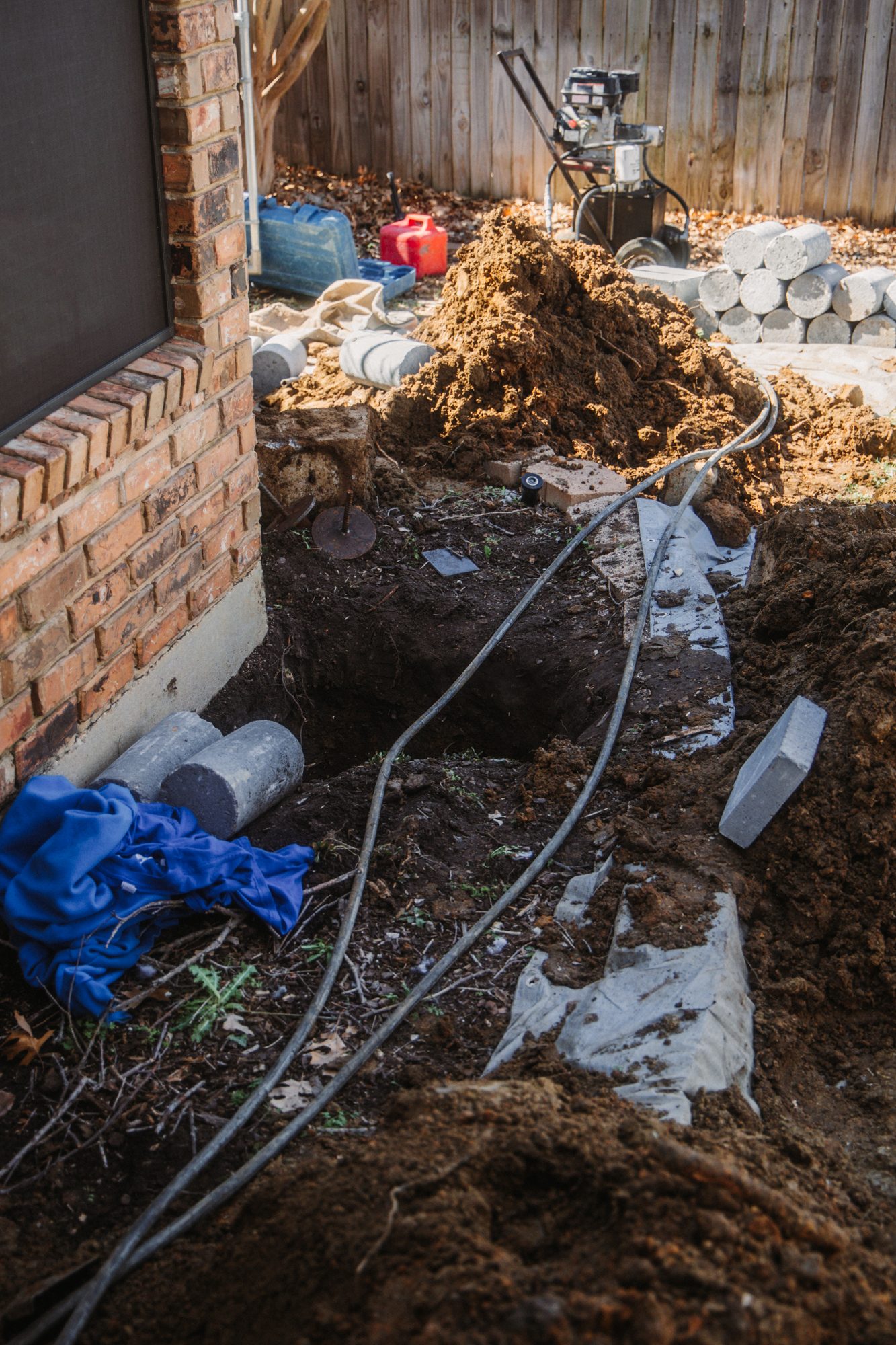
Steel piers
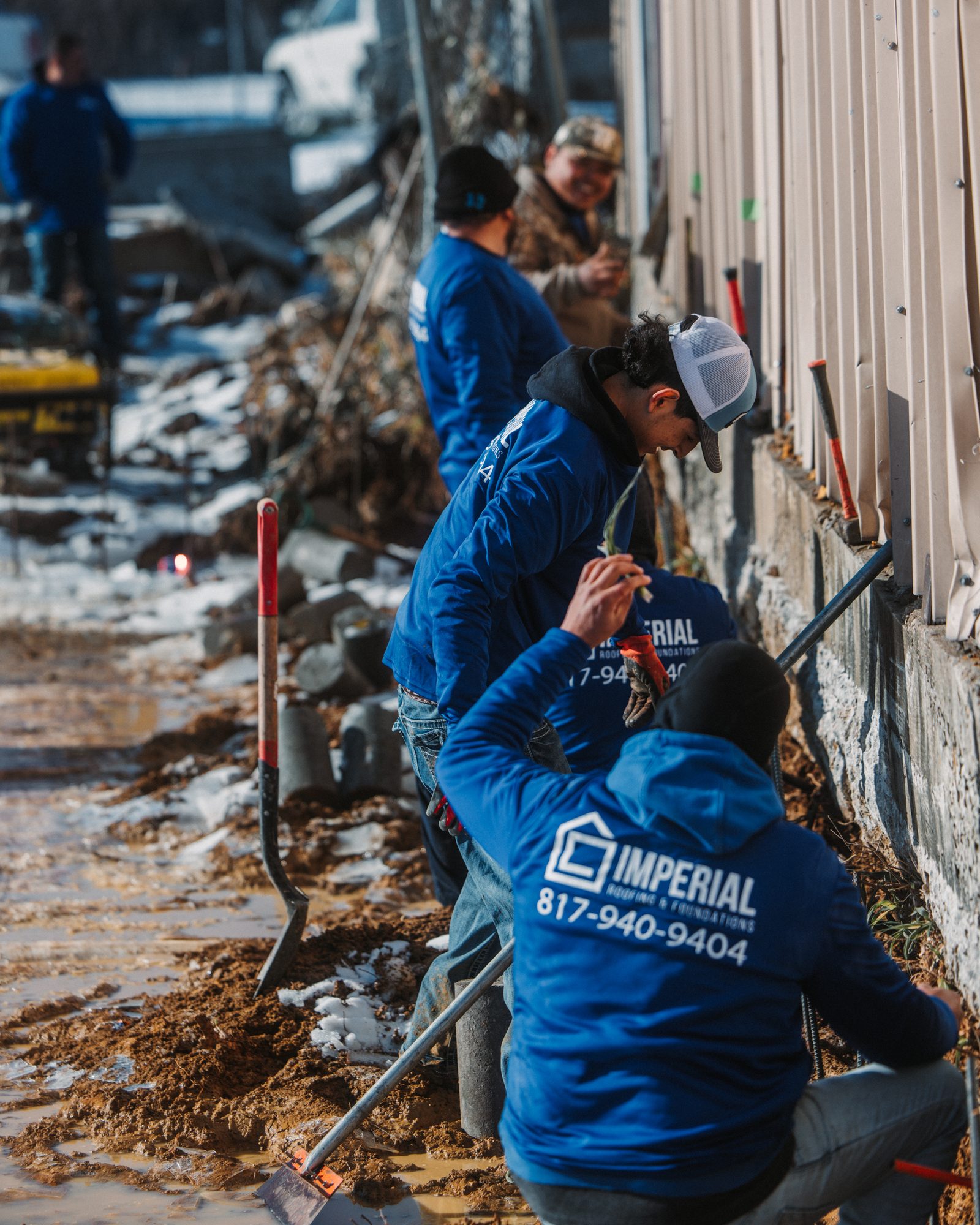
Steel sections driven in sequence, using the weight of the structure as resistance, until they hit soil that will actually carry the load. On a lot of North Texas lots that is well below the active clay layer.
Steel costs more per placement. What you get for it is depth and load capacity, which is exactly what a heavy brick two story on deep clay needs.
- Good for: deeper conditions, heavier loads, active settlement, commercial grade beams.
- Also useful when: soil depth varies across the same elevation and you need each placement to find its own footing.
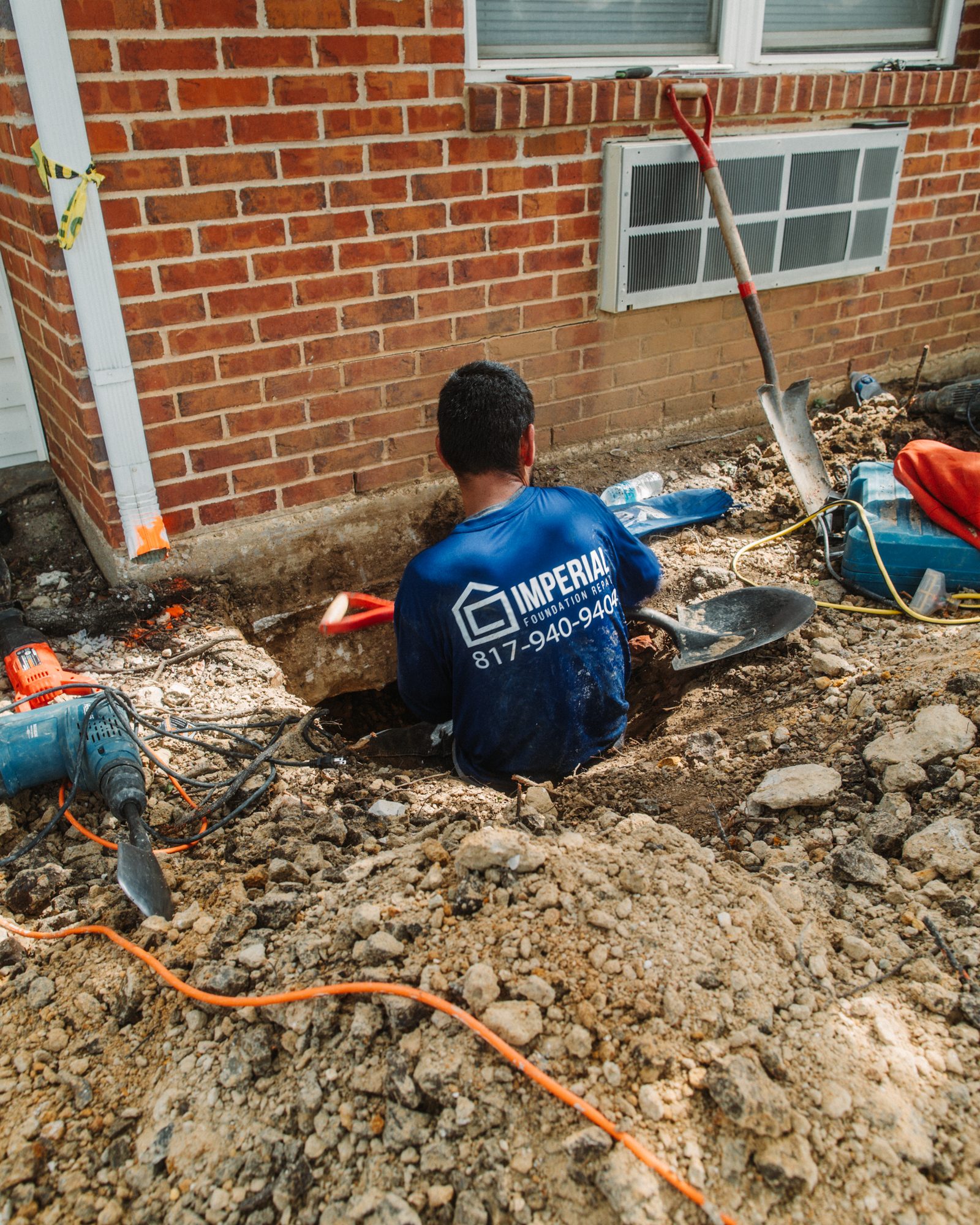
Transition piers, the third option nobody mentions
Sometimes we need steel depth in a spot where a full steel installation does not physically fit. A transition assembly pairs a concrete base with a steel section to get there.
This comes up on interior placements and along elevations with tight working room more often than people expect.
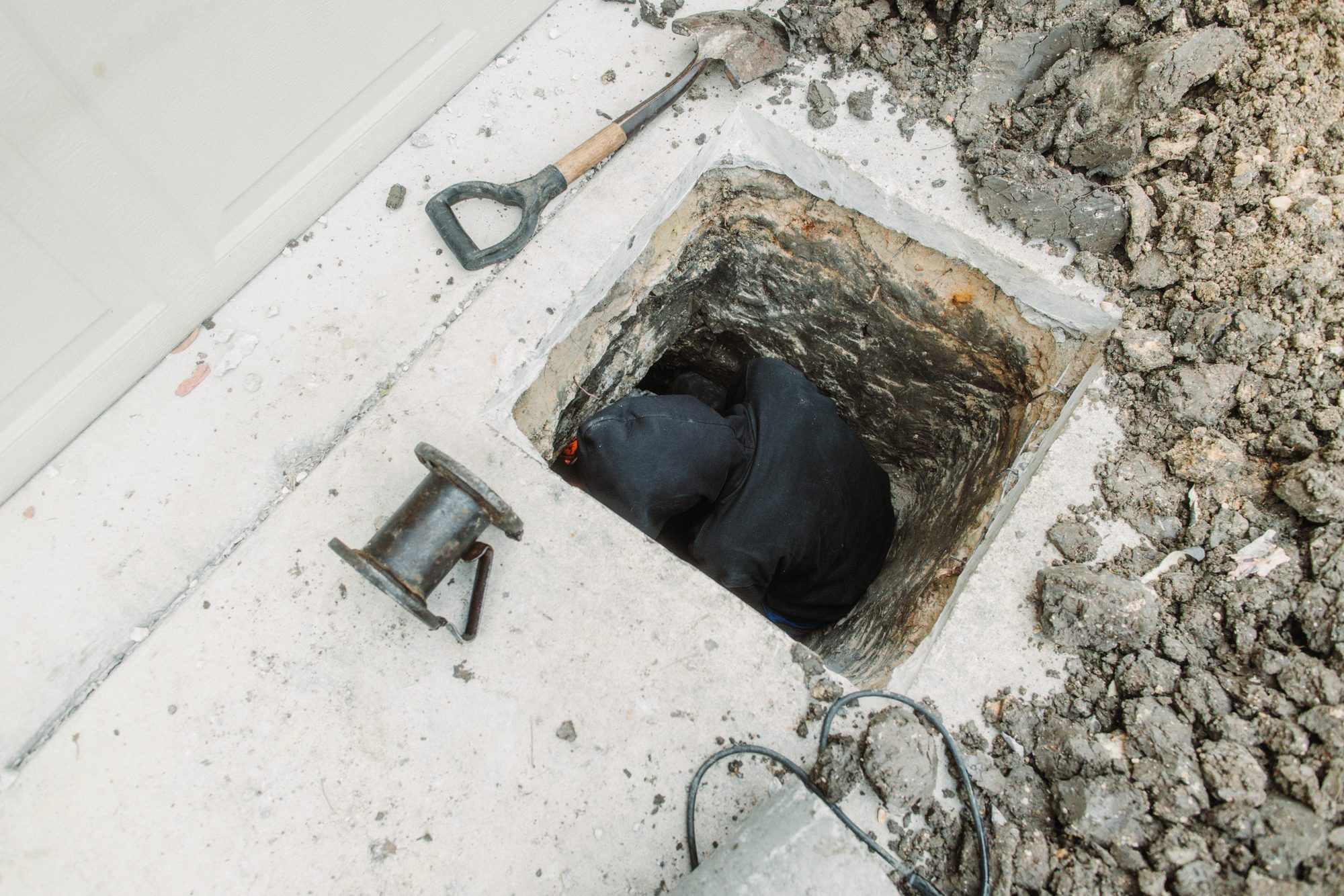
How we actually decide
We take elevation readings across the floor, look at what the house is built from, and dig. The soil tells us what it is going to take. On plenty of jobs the answer is a mix, with steel on the heavy elevation and concrete where conditions allow.
If a company only installs one type, you are going to get that type regardless of what your dirt says. That is worth knowing before you sign anything.
Common questions
People Ask Us This
- Do steel piers last longer than concrete?
- Both hold when they are installed to the right depth. Depth and installation quality matter far more than the material argument.
- Will my house be lifted back to perfectly level?
- We lift to a practical elevation, not a theoretical one. Chasing perfectly level on a house that has been settled for twenty years cracks finishes that were fine before we showed up.
- How long does a pier job take?
- Most residential jobs run one to three days on site, plus cleanup. Tunneling and larger placement counts add time.
Written by
Chris Tinsley
Co-owner of Imperial Foundation Repair in Arlington. Runs the crews and the work in the ground.
More from Chris